No products in the cart.

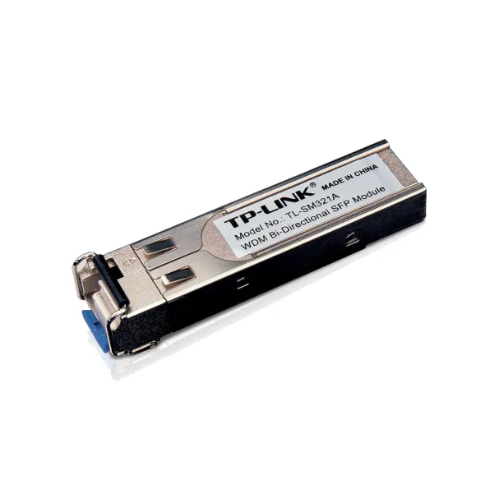
TP-Link Omada SM321A 1000Base-BX WDM Bi-Directional Gigabit SFP Module — The Complementary Half of Every Smart Single-Fiber Gigabit Link
If you’ve already read about the SM321B, you already understand the fundamental value proposition of WDM bi-directional SFP technology — transmitting and receiving Gigabit data over a single strand of fiber simultaneously, cutting fiber consumption per link in half and maximizing the return on every fiber run already laid in the ground. The TP-Link Omada SM321A is the essential companion to that story. It is the other half of a complete bi-directional WDM fiber link — the module that makes single-fiber Gigabit transmission physically possible when paired with the SM321B at the opposite end.
Where the SM321B transmits at 1310nm and receives at 1550nm, the SM321A does exactly the reverse — transmitting at 1550nm and receiving at 1310nm. This wavelength inversion is the entire principle behind WDM bi-directional technology: two signals traveling in opposite directions on the same fiber strand, each on a different wavelength, each invisible to the other’s receiver. Install an SM321A at one end, an SM321B at the other, connect them with a single strand of single-mode fiber via SC/UPC simplex patch leads, and the result is a clean, full-duplex Gigabit link that uses exactly half the fiber infrastructure of a conventional duplex connection.
For ISPs in Bangladesh deploying fiber infrastructure across Dhaka’s congested underground ducting systems, enterprise network teams extending inter-building links across university campuses in Rajshahi or Khulna, or telecom operators managing high-fiber-count cables where every strand represents real capital investment, the SM321A and SM321B pair represent one of the most practical and immediately impactful infrastructure optimizations available at the transceiver level.
The SM321A operates over single-mode fiber with a maximum reach of 10 kilometers — the same as its SM321B counterpart — which covers the full spectrum of practical ISP distribution links, metropolitan Ethernet uplinks, and campus backbone fiber runs without requiring optical amplification, regeneration equipment, or signal boosting hardware anywhere along the span. The SC/UPC simplex connector interface connects to the same standard fiber adapter panels and simplex patch leads that any structured cabling installer in Bangladesh’s commercial and ISP sectors already works with daily.
Like the SM321B, the SM321A is fully compliant with the SFP Multi-Source Agreement (MSA) standard and IEEE 802.3 1000BASE-BX10, ensuring reliable operation in SFP-capable host equipment from TP-Link, Cisco, Huawei, MikroTik, Ubiquiti, D-Link, and Netgear — subject to host compatibility verification. The hot-pluggable SFP footprint allows insertion and removal from live switches without service interruption, and TX Disable and Loss of Signal functions are fully supported for standard SFP management signaling.
Digital Diagnostic Monitoring is supported on the SM321A, giving network operations teams real-time visibility into the module’s health parameters — transmit optical power at 1550nm, received optical power at 1310nm, operating temperature, supply voltage, and laser bias current — all accessible from the host switch’s management interface without physical access to the equipment room. In a country like Bangladesh where NOC teams in Dhaka frequently manage fiber links extending to remote aggregation points in outlying districts, that remote diagnostic capability directly reduces the frequency and cost of truck rolls for fiber link troubleshooting.
Metallic SFP housing provides EMI shielding for signal integrity in busy equipment rooms, and RoHS compliance ensures the module meets international environmental standards — increasingly relevant as Bangladesh’s enterprise procurement processes align with global supply chain sustainability requirements.
It is worth being clear about one thing that sometimes causes confusion in the field: the SM321A and SM321B are not interchangeable at either end of a link. The SM321A must always be at one specific end, and the SM321B at the other. Swapping both to SM321A — or both to SM321B — produces no link, because both ends would be transmitting and listening on the same wavelengths simultaneously. When ordering for a new fiber link deployment, always procure one SM321A and one SM321B per link span.
TP-Link Omada SM321A Specifications
| Specification | Details |
|---|---|
| Brand | TP-Link (Omada Series) |
| Model | SM321A |
| Product Type | 1000Base-BX WDM Bi-Directional Gigabit SFP Module |
| Fiber Mode | Single-Mode Fiber (SMF) |
| Transmission Direction | Bi-Directional (Single Fiber Strand) |
| TX Wavelength | 1550 nm |
| RX Wavelength | 1310 nm |
| Complementary Module | SM321B (TX: 1310nm / RX: 1550nm) |
| Data Rate | 1.25 Gbps (1000Base-BX) |
| Maximum Reach | Up to 10 km over Single-Mode Fiber |
| Connector Type | SC/UPC Simplex |
| Network Standard | IEEE 802.3 1000BASE-BX10 |
| SFP MSA Compliance | Yes — Multi-Source Agreement Standard |
| Digital Diagnostic Monitoring | Yes (DDM / DOM supported) |
| DDM Parameters | TX Power, RX Power, Temperature, Voltage, Laser Bias Current |
| Hot-Pluggable | Yes |
| TX Disable Function | Supported |
| Loss of Signal (LOS) | Supported |
| Supply Voltage | 3.3V DC |
| Operating Temperature | 0°C to +70°C |
| Storage Temperature | -40°C to +85°C |
| Enclosure Material | Metallic (Low EMI) |
| Compatible Vendors | TP-Link, Cisco, Huawei, MikroTik, Ubiquiti, D-Link, Netgear |
| RoHS Compliant | Yes |
| Warranty | 1 Year TP-Link Manufacturer Warranty |
| Application | Single-fiber ISP uplinks, campus inter-building fiber, MAN links |
Why You Buy TP-Link Omada SM321A 1000Base-BX WDM Bi-Directional SFP Module
- Completes the Single-Fiber WDM Pair That Halves Fiber Infrastructure Cost on Every Link — The SM321A exists to complete something the SM321B alone cannot — a working full-duplex Gigabit link over a single fiber strand. Together, the SM321A and SM321B form a WDM bi-directional pair that carries bidirectional Gigabit traffic over one fiber instead of two, immediately halving the fiber strand count per link across an entire network deployment. For ISPs and enterprise network teams in Bangladesh where fiber duct capacity is expensive, conduit runs are congested, and every unlit fiber strand represents sunk capital that needs to work harder, this single-fiber operation is one of the most cost-effective infrastructure decisions available at the transceiver level — delivering tangible savings that compound across every link in a multi-site or multi-floor deployment.
- 10km Single-Mode Reach With DDM Gives ISPs Remote Visibility Into Every Fiber Span — Fiber link failures in Bangladesh’s ISP and enterprise networks often go undiagnosed until a customer reports a service outage — by which time the SLA clock is already running. The SM321A’s 10km single-mode reach combined with full Digital Diagnostic Monitoring changes that dynamic entirely. Network operations teams can monitor transmit and receive optical power levels, laser temperature, bias current, and supply voltage at the SM321A end of every fiber span from the central management interface — detecting degraded optics, dirty connectors, or developing fiber faults before they become service-affecting incidents, without dispatching a technician to the remote end of the link.
- MSA Compliance and Multi-Vendor Compatibility Protect the Long-Term Value of Every Module Purchase — Fiber transceiver investments need to outlast individual switch refresh cycles. A module locked to a single vendor’s equipment becomes a stranded asset the moment that vendor’s switch is replaced. The SM321A’s full SFP MSA compliance and verified interoperability with TP-Link, Cisco, Huawei, MikroTik, Ubiquiti, D-Link, and Netgear equipment ensures the module remains deployable and valuable across multiple generations of switching hardware — protecting the procurement investment and simplifying the spare-module inventory that ISPs and enterprise IT teams in Bangladesh need to maintain for rapid link restoration during fiber incidents.
FAQ
Q1: What is the difference between the TP-Link SM321A and SM321B, and how do I know which one to use at each end? The SM321A transmits at 1550nm and receives at 1310nm, while the SM321B transmits at 1310nm and receives at 1550nm — each module’s transmit wavelength is the other’s receive wavelength, which is exactly how WDM bi-directional technology works on a single fiber strand; in practice, it doesn’t matter which physical end of the fiber run gets the SM321A versus the SM321B, as long as they are different models at opposite ends — what matters is that you never install two SM321A or two SM321B modules on the same link, as this produces no connection.
Q2: Can the TP-Link SM321A operate in a Cisco, Huawei, or MikroTik switch without compatibility issues? The SM321A is compliant with the SFP Multi-Source Agreement standard and IEEE 802.3 1000BASE-BX10, which are the two specifications that govern cross-vendor SFP compatibility — it is verified to operate in switches and routers from Cisco, Huawei, MikroTik, Ubiquiti, D-Link, and Netgear in addition to TP-Link’s own Omada lineup, though verifying against the specific host device’s SFP compatibility documentation before large-scale procurement is always recommended practice for professional deployments.
Related products
Sale!

UNIVIEW CAB-LC3100B-E-IN ORANGE CAT6 Cable
Original price was: 16,500.00৳ .14,300.00৳ Current price is: 14,300.00৳ .Sale!

Ubiquiti Unifi 6 Lite AX1500 Mbps Gigabit Dual Band Access Point
Original price was: 19,500.00৳ .17,500.00৳ Current price is: 17,500.00৳ .Sale!

TP-Link EAP225 AC1350 Wireless Access Point
Original price was: 7,500.00৳ .6,900.00৳ Current price is: 6,900.00৳ .Sale!
Dahua DHI-LM22-A201YFS 21.45″ IPS Full HD 100Hz Monitor
Original price was: 14,500.00৳ .12,900.00৳ Current price is: 12,900.00৳ .Sale!
WD Blue 500GB Desktop Hard Disk Drive
Original price was: 3,000.00৳ .2,800.00৳ Current price is: 2,800.00৳ .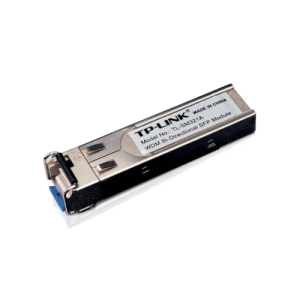 TP-Link Omada SM321A 1000Base-...
 Original price was: 2,250.00৳ .2,150.00৳ Current price is: 2,150.00৳ .
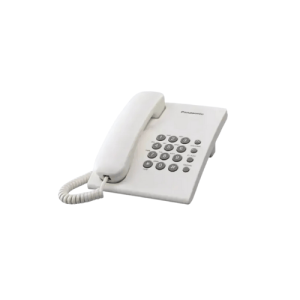
Panasonic Phone Set KX-TS500MX (Original)
Original price was: 2,050.00৳ .1,650.00৳ Current price is: 1,650.00৳ .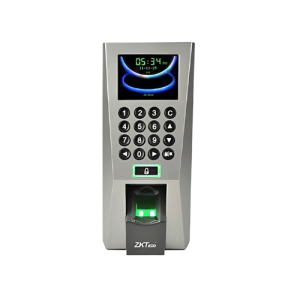
ZKTeco F18 Access Control
Original price was: 12,500.00৳ .10,300.00৳ Current price is: 10,300.00৳ .
Toten 6U Server Rack 600 x 450mm
Original price was: 13,500.00৳ .12,300.00৳ Current price is: 12,300.00৳ .
Categories
Categories