No products in the cart.

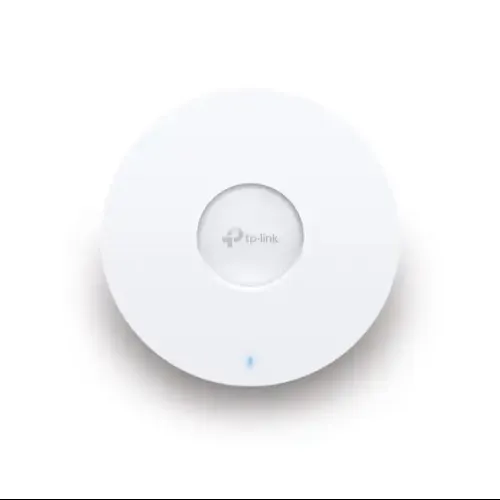
TP-Link EAP660 HD AX3600 Dual-Band Ceiling Mount Wi-Fi 6 Access Point — High-Density Wireless Performance That Scales With Your Business
Here’s a situation that plays out daily in offices, schools, hotels, and shopping centers across Bangladesh — the Wi-Fi signal looks strong on every device, yet the network is painfully slow. Pages load sluggishly. Video calls stutter. The helpdesk gets flooded with complaints that make no technical sense until you realize what’s actually happening: the access point isn’t slow because of weak signal, it’s overwhelmed by sheer device count. That’s a congestion problem, and it requires a fundamentally different solution. The TP-Link EAP660 HD AX3600 Dual-Band Ceiling Mount Wi-Fi 6 Access Point is exactly that solution.
Built on Wi-Fi 6 (802.11ax) with 4×4 MU-MIMO on both bands and full uplink and downlink OFDMA technology, the EAP660 HD doesn’t just deliver faster raw speeds — it restructures how airtime is allocated so that hundreds of devices can communicate simultaneously without fighting each other for bandwidth. The result is a network that stays responsive and consistent under real-world load, not just in a lab demonstration.
The numbers are genuinely impressive: 3,550Mbps combined wireless throughput — 2,402Mbps on the 5GHz band and 1,148Mbps on 2.4GHz — with support for 1,000+ concurrent client connections and coverage of up to 140 square meters per unit. Whether you’re running a busy corporate office floor in Dhaka’s Gulshan, a university classroom block in Sylhet, a hotel lobby in Cox’s Bazar, or a hospital wing in Chittagong, a single EAP660 HD can handle environments that would bring lesser access points to their knees.
The inclusion of a 2.5 Gigabit Ethernet port is a practical decision that matters more than it might initially appear. With a 2.5G PoE port delivering up to 2.5Gbps wired connectivity, the access point’s uplink capacity actually keeps pace with its wireless throughput potential — something standard Gigabit-only APs simply cannot do when handling hundreds of active clients simultaneously.
Management is handled through TP-Link’s Omada SDN ecosystem, which provides centralized cloud management, zero-touch provisioning, intelligent monitoring, and seamless integration with Omada switches and gateways — all from a single interface accessible from anywhere. For IT managers overseeing multi-site deployments across Bangladesh, that level of visibility and control without being physically present at each location is a genuine operational advantage.
TP-Link EAP660 Specifications
| Specification | Details |
|---|---|
| Model | EAP660 HD |
| Wi-Fi Standard | IEEE 802.11 a/b/g/n/ac/ax (Wi-Fi 6) |
| Frequency Bands | 2.4GHz (2.400–2.4835GHz) / 5GHz (5.150–5.850GHz) |
| Spatial Streams | 4×4 UL/DL MU-MIMO (2.4GHz) + 4×4 UL/DL MU-MIMO (5GHz) |
| Max Throughput (5GHz) | Up to 2,402Mbps (802.11ax HE80) |
| Max Throughput (2.4GHz) | Up to 1,148Mbps (802.11ax HE40) |
| Aggregate Throughput | AX3600 (3,550Mbps Combined) |
| Channel Bandwidth | 2.4GHz: 20/40MHz / 5GHz: 20/40/80MHz |
| Radio Technology | UL/DL OFDMA, 1024-QAM, Beamforming (TxBF), STBC, LDPC |
| Antennas | 2.4GHz: 4 × 6dBi Internal / 5GHz: 4 × 6.5dBi Internal (Omnidirectional) |
| Coverage Range | Up to 140m² (1,500 ft²) |
| Concurrent Clients | 1,000+ |
| SSIDs | 16 Total (8 per band) |
| Network Interface | 1 × 10/100/1000/2500Mbps Multi-Gigabit RJ45 (PoE In) |
| DC Power Interface | 12VDC / 2A |
| Power Supply | 802.3at PoE+ (42.5–57V) or 12V DC Adapter |
| Max Power Consumption | 22.5W (PoE, full load) |
| Tx Power (2.4GHz) | 22dBm (FCC) / 20dBm EIRP (CE) |
| Tx Power (5GHz) | 22dBm (FCC) / Up to 30dBm EIRP (CE, band-dependent) |
| IoT | BLE 5.2 (1Mbps) |
| Memory | Flash: 128MB NAND / RAM: 512MB DDR3 |
| Security | WPA/WPA2/WPA3-Personal & Enterprise, 802.1X, MAC Filter, Rogue AP Detection |
| Captive Portal | Voucher, SMS, RADIUS, Local User, External Portal, LDAP |
| Roaming | 802.11k/v/r, AI Roaming, Non-Stick & Ping-Pong Suppression |
| Management | Omada SDN Controller, Omada App, Standalone Web GUI, SSH, SNMP v1/v2c/v3 |
| Mounting | Ceiling / Wall / Junction Box / T-Bar (Kits Included) |
| Dimensions | 220mm × 220mm × 32.5mm |
| Weight | 0.75kg (Main Unit) |
| Operating Temperature | 0°C to +40°C |
| Storage Temperature | -40°C to +70°C |
| Humidity | 10% to 90% Non-Condensing |
| Surge Protection | Ethernet Ports: ±2kV |
| ESD Protection | Air: ±8kV / Contact: ±4kV |
| MTBF | 346,690 hours (EU) / 314,609 hours (US) at 25°C |
| Certifications | FCC/IC, CE/NTRA, JRF, VCCI |
Why You Should Buy the TP-Link EAP660 HD AX3600 Wi-Fi 6 Access Point
- 4×4 MU-MIMO on Both Bands Means Real High-Density Performance — Not Just a Marketing Claim — Many access points advertise MU-MIMO but implement it only on the 5GHz band, leaving 2.4GHz clients — often IoT devices, older smartphones, and budget laptops — stuck on a single-stream bottleneck. The EAP660 HD deploys full 4×4 UL/DL MU-MIMO simultaneously on both bands combined with OFDMA, which means every device across your network — from the latest flagship smartphone to older connected devices — benefits from genuine multi-user efficiency. For high-density deployments in Bangladesh’s corporate offices, educational institutions, and hospitality properties, this directly translates into a network that remains stable and fast even during peak-hour load spikes.
- 2.5G Uplink Port Eliminates the Wired Bottleneck That Cripples Standard APs — Here’s a problem that’s easy to overlook during procurement: an access point pushing 3.5Gbps of wireless traffic to clients physically cannot deliver that performance if it’s connected to the network through a standard 1Gbps Ethernet port — the wire becomes the bottleneck long before the radio does. The EAP660 HD’s 2.5 Gigabit multi-gigabit port solves this problem directly, ensuring that wired uplink capacity keeps pace with what the radios can actually deliver. For Bangladeshi businesses investing in Wi-Fi 6 infrastructure, this detail separates a genuinely future-proof deployment from one that creates performance ceilings after day one.
- Omada SDN Integration Delivers Enterprise Network Management at SMB-Friendly Complexity — Managing a multi-AP wireless network across several floors, buildings, or locations used to require dedicated hardware controllers and specialist network engineers. The Omada SDN ecosystem changes that calculus entirely — zero-touch provisioning, batch configuration, centralized monitoring, seamless roaming, and captive portal management are all accessible through the cloud-based Omada platform or the mobile app, from anywhere in the world. For growing businesses in Dhaka, Chittagong, Sylhet, and beyond that need professional network management without a full-time network operations team, this is a meaningful operational advantage built directly into the product.
FAQ — TP-Link EAP660 HD AX3600 Wi-Fi 6 Access Point
Q1: Does the TP-Link EAP660 HD require the Omada Hardware Controller to function, or can it work standalone?
The EAP660 HD supports full standalone operation — you can configure and manage it directly through a web browser without any controller hardware or software. However, to unlock advanced features like seamless roaming, mesh networking, captive portal, and centralized multi-AP management, you’ll need an Omada controller — either the free Omada Cloud-Based Controller (CBC), the Omada Software Controller installed on a local server, or a dedicated Omada Hardware Controller. For single-AP or small deployments, standalone mode works perfectly fine. For multi-AP business deployments in Bangladesh, the free Omada CBC is the recommended path.
Q2: What is the price of the TP-Link EAP660 HD Wi-Fi 6 Access Point in Bangladesh?
The TP-Link EAP660 HD is available in Bangladesh at a competitive enterprise Wi-Fi 6 access point price — contact your local authorized TP-Link distributor or trusted networking equipment supplier in Dhaka, Chittagong, or Sylhet for the most current and accurate BDT pricing and stock availability.
Q3: How does the TP-Link EAP660 HD handle roaming between multiple access points in a large deployment?
The EAP660 HD supports full 802.11k (neighbor reporting), 802.11v (BSS transition management), and 802.11r (fast BSS transition) roaming protocols, combined with TP-Link’s proprietary AI Roaming, Non-Stick Roaming, and Ping-Pong Roaming Suppression features. In practice, this means client devices — whether smartphones, laptops, or VoIP handsets — transition smoothly between access points as users move through a building without experiencing noticeable drops in connection quality. For hotels, hospitals, campuses, and large office floors across Bangladesh where users move constantly, this seamless roaming capability is critical to delivering a genuinely professional wireless experience.

Related products
Sale!
Toten 12U Server Rack 600 x 450mm
Original price was: 17,500.00৳ .16,500.00৳ Current price is: 16,500.00৳ .Sale!

UNIVIEW CAB-LC3100B-E-IN ORANGE CAT6 Cable
Original price was: 16,500.00৳ .14,300.00৳ Current price is: 14,300.00৳ .Sale!

Ubiquiti Unifi 6 Lite AX1500 Mbps Gigabit Dual Band Access Point
Original price was: 19,500.00৳ .17,500.00৳ Current price is: 17,500.00৳ .Sale!
Dahua DHI-LM22-A201YFS 21.45″ IPS Full HD 100Hz Monitor
Original price was: 14,500.00৳ .12,900.00৳ Current price is: 12,900.00৳ .Sale!
Toshiba S300 Pro 10TB 3.5 Inch SATA 7200RPM Surveillance HDD
Original price was: 52,000.00৳ .48,500.00৳ Current price is: 48,500.00৳ .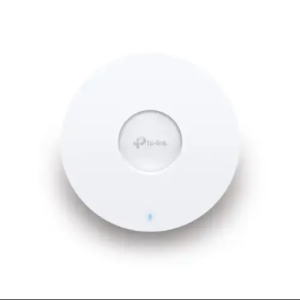 Tp-Link EAP660 HD AX3600 Dual ...
 Original price was: 23,450.00৳ .21,290.00৳ Current price is: 21,290.00৳ .
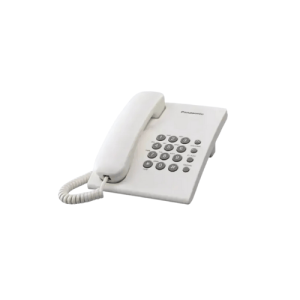
Panasonic Phone Set KX-TS500MX (Original)
Original price was: 2,050.00৳ .1,650.00৳ Current price is: 1,650.00৳ .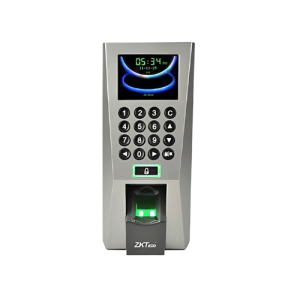
ZKTeco F18 Access Control
Original price was: 12,500.00৳ .10,300.00৳ Current price is: 10,300.00৳ .
Toten 6U Server Rack 600 x 450mm
Original price was: 13,500.00৳ .12,300.00৳ Current price is: 12,300.00৳ .
Categories
Categories